
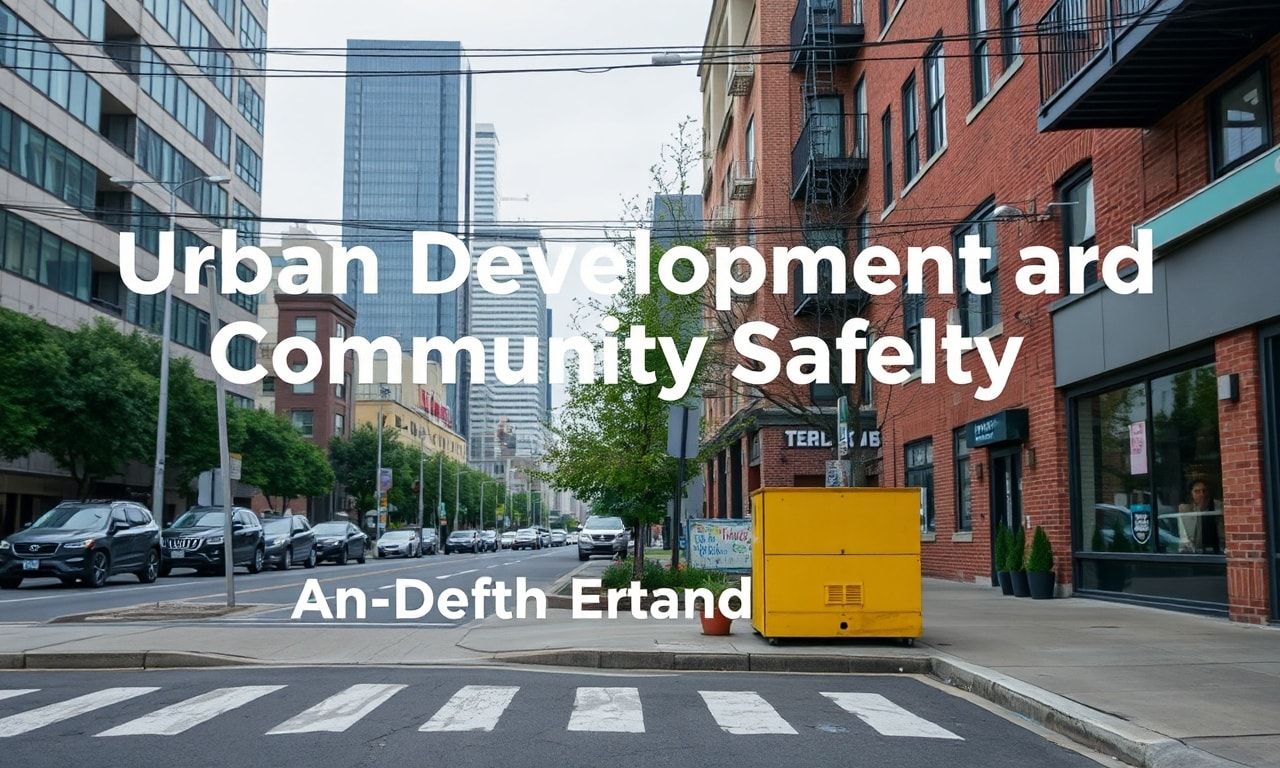
The Evolving Landscape of Urban Development
The urban landscape is continuously evolving, driven by technological advancements, demographic shifts, and economic factors. Cities around the world are grappling with the challenges of rapid urbanization, which includes issues such as housing shortages, infrastructure strain, and public safety concerns. As urban planners and policymakers strive to create sustainable and livable cities, the focus on community safety has become increasingly paramount.
The Role of Community Safety in Urban Planning
Community safety is a multifaceted issue that encompasses crime prevention, emergency preparedness, and the overall well-being of residents. Urban planners are now integrating safety measures into the design and development of neighborhoods. This approach, known as Crime Prevention Through Environmental Design (CPTED), emphasizes the importance of creating spaces that are well-lit, accessible, and conducive to community engagement. By fostering a sense of ownership and responsibility among residents, urban planners aim to reduce crime and enhance the quality of life in urban areas.
Innovative Solutions for Urban Safety
Innovative technologies and strategies are being employed to address urban safety challenges. Smart city initiatives, for instance, leverage data analytics and IoT (Internet of Things) devices to monitor and manage public spaces more effectively. Surveillance cameras, smart lighting, and emergency response systems are just a few examples of how technology is being used to enhance community safety. Additionally, community-based programs, such as neighborhood watch groups and self-defense class updates, play a crucial role in empowering residents to take an active role in their own safety.
The Impact of Urban Development on Crime Rates
Research has shown that well-planned urban development can have a significant impact on crime rates. For example, mixed-use developments that combine residential, commercial, and recreational spaces can reduce crime by promoting a sense of community and increasing natural surveillance. Similarly, the presence of green spaces and public amenities can deter criminal activity by providing residents with safe and engaging environments. However, it is essential to recognize that urban development alone cannot solve all safety issues. A holistic approach that includes effective policing, community engagement, and social programs is necessary to create truly safe and secure urban environments.
Case Studies: Successful Urban Safety Initiatives
Several cities have successfully implemented urban safety initiatives that have yielded positive results. For instance, the city of Medellín, Colombia, has transformed its image from one of high crime and violence to a model of urban innovation. Through the implementation of cable cars, libraries, and parks in previously marginalized neighborhoods, Medellín has not only improved access to public services but also reduced crime rates and enhanced community cohesion. Similarly, the city of New York has seen a significant decline in crime rates over the past few decades, thanks to a combination of effective policing strategies, community engagement, and urban development projects.
Challenges and Future Directions
Despite the progress made in urban safety, several challenges remain. Rapid urbanization, economic inequality, and the proliferation of digital crimes pose ongoing threats to community safety. To address these challenges, urban planners, policymakers, and community leaders must collaborate to develop comprehensive and sustainable solutions. This includes investing in affordable housing, improving public transportation, and promoting digital literacy to combat cybercrime. Furthermore, fostering a culture of inclusivity and social justice is essential to ensure that all residents, regardless of their background, have access to safe and secure living environments.
Conclusion
The intersection of urban development and community safety is a complex and dynamic field that requires a multifaceted approach. By integrating innovative technologies, community-based programs, and effective urban planning strategies, cities can create safer and more livable environments for their residents. As urbanization continues to shape the future of our cities, it is crucial to prioritize community safety and well-being to ensure that all residents can thrive in their communities.
To stay informed about the latest developments around the globe, consider exploring current global events overview which offers a comprehensive look at recent happenings.
As Düsseldorf undergoes a cultural resurgence, new initiatives transform the city in exciting ways, as detailed in our latest report.
As artificial intelligence continues to reshape industries, our latest feature AI’s impact on society examines the technology’s transformative effects on daily life.