
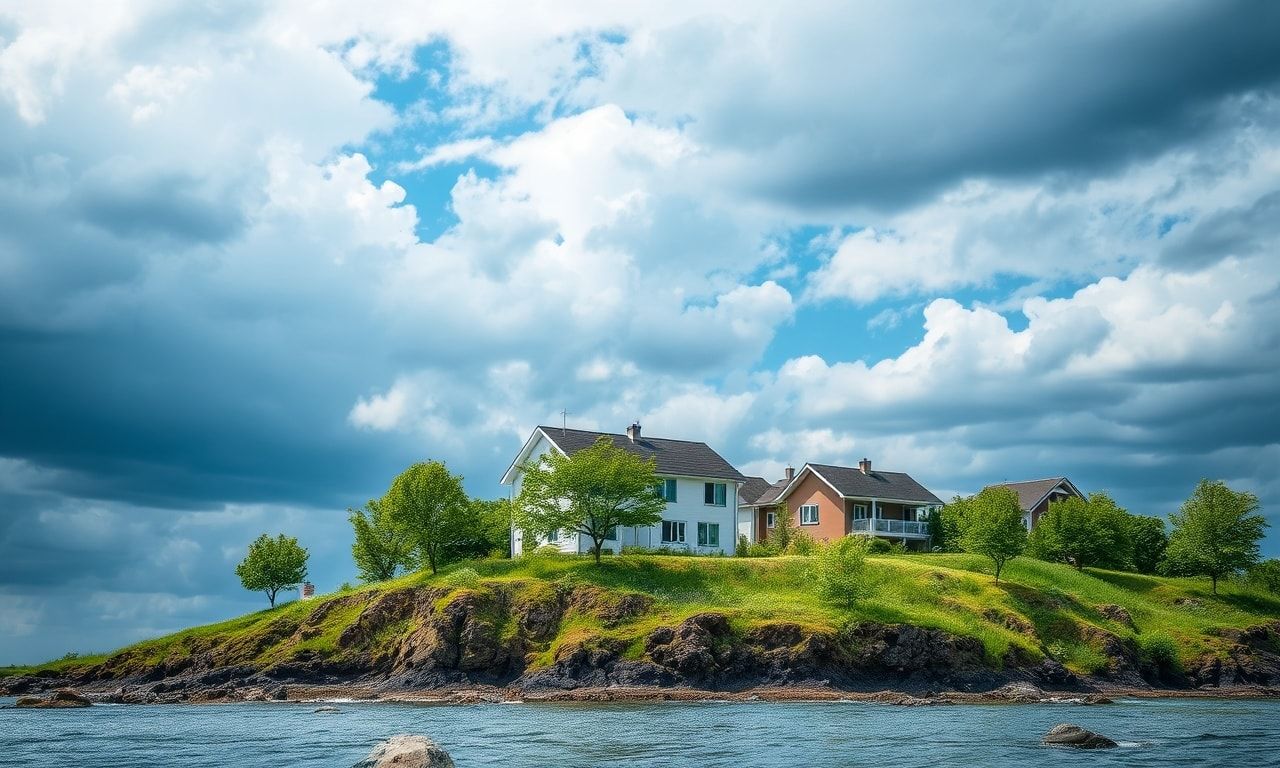
The Growing Influence of Climate Change
Climate change is no longer a distant threat; it is a present reality that is reshaping various sectors, including real estate. The increasing frequency of natural disasters, rising sea levels, and extreme weather conditions are compelling investors, developers, and homeowners to reconsider their approaches to property. The real estate market is experiencing a significant shift as stakeholders adapt to the new climate reality.
Rising Sea Levels and Coastal Properties
One of the most pressing concerns for the real estate market is the rise in sea levels. Coastal properties, which have traditionally been highly sought after, are now facing an uncertain future. According to a report by the Union of Concerned Scientists, approximately 300,000 coastal homes in the United States are at risk of chronic inundation by 2045. This trend is not limited to the U.S.; coastal cities around the world, from Miami to Shanghai, are grappling with the same issue.
In response, some cities are implementing stricter building codes and zoning laws to mitigate the risks. For instance, the city of Miami has raised roads and installed pumps to combat flooding. However, these measures are often seen as temporary solutions. Long-term strategies, such as relocating communities and investing in resilient infrastructure, are becoming increasingly necessary.
Extreme Weather Events and Property Damage
Extreme weather events, such as hurricanes, wildfires, and floods, are becoming more frequent and intense. These events cause significant property damage, leading to substantial financial losses for homeowners and insurance companies. The increasing frequency of these events is prompting a reevaluation of risk assessment models and insurance policies.
Insurance companies are now factoring in climate change when determining premiums and coverage. Properties in high-risk areas may see a significant increase in insurance costs or even become uninsurable. This shift is influencing buying decisions, as potential homeowners are increasingly considering the long-term risks associated with a property’s location.
Adapting to the New Reality
As the real estate market adapts to the challenges posed by climate change, several trends are emerging. Sustainable and resilient design is becoming a priority for developers. Green buildings, which are designed to minimize environmental impact and withstand extreme weather conditions, are gaining popularity. Features such as solar panels, rainwater harvesting systems, and impact-resistant materials are becoming standard in new constructions.
Moreover, the concept of ‘climate refugees’ is gaining traction. As areas become increasingly uninhabitable due to climate change, people are being forced to relocate. This migration is creating new demand in previously less popular regions. For example, cities in the Midwest of the United States are seeing an influx of residents from coastal areas, driven by concerns over rising sea levels and extreme weather events.
The Role of Government and Policy
Governments around the world are recognizing the need to address climate change in the real estate sector. Policies aimed at promoting sustainable development and mitigating climate risks are being implemented. For instance, the European Union’s Green Deal includes measures to improve the energy efficiency of buildings and reduce greenhouse gas emissions.
In the United States, the Federal Emergency Management Agency (FEMA) provides grants and technical assistance to help communities become more resilient to natural disasters. Similarly, local governments are enacting zoning laws and building codes that require new constructions to meet higher standards for sustainability and resilience.
Investing in a Sustainable Future
Investors are also taking note of the shifting landscape. Real estate investment trusts (REITs) focused on sustainable and resilient properties are attracting significant interest. These investments not only offer the potential for financial returns but also contribute to environmental sustainability and social responsibility.
As consumers become more aware of the impact of climate change, they are increasingly seeking properties that align with their values. A study by the National Association of Realtors found that 61% of homebuyers consider a home’s energy efficiency an important factor in their purchasing decision. This trend is driving demand for properties with lower carbon footprints and higher resilience to climate-related risks.
In conclusion, climate change is profoundly impacting the real estate market. From rising sea levels to extreme weather events, the challenges are numerous. However, the real estate industry is adapting, with a focus on sustainable and resilient design, government policies, and investment in green technologies. As the world continues to grapple with the effects of climate change, the real estate market will undoubtedly continue to evolve, shaping the way we live and invest in property for years to come.
For those interested in sustainable fashion, exploring essentiels garde-robe féminine can provide insights into how other industries are adapting to environmental challenges.